×

Starting July 2025 welcome Dr. Anja Amundson to our practice! Meet our new doctor here

Our Blog

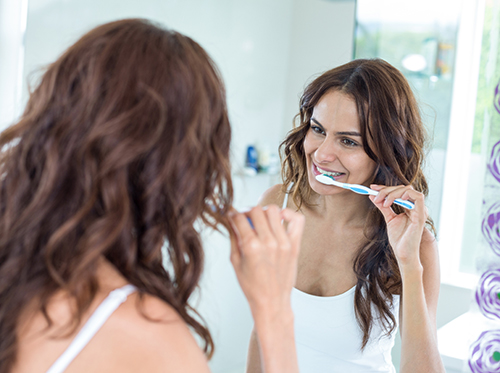
Five Things You Should Never Do With Your Toothbrush

February 16th, 2018

When’s the last time you gave your toothbrush any serious thought? Sure, you use it every day (and ideally twice), and you know that with a dollop of toothpaste it waxes up your pearly whites nicely, not to mention preventing bacteria, plaque, and inflammation.

But what are the things you should never do with your toothbrush? Here’s a brush-up on five toothbrush no-nos, from Elite Smiles Dental.

1. If you have your toothbrush too close to the toilet, you’re brushing your teeth with what’s in your toilet. In other words, keep your toothbrush stored as far from the toilet as possible.

2. The average toothbrush harbors ten million microbes. Many families keep their toothbrushes jammed together in a cup holder on the bathroom sink, but this can lead to cross-contamination. Family members’ toothbrushes should be kept an inch apart. Don’t worry; they won’t take it personally.

3. Don’t delay replacing your toothbrush. It’s best to purchase a new one every three to four months, but by all means get one sooner if the bristles are broken down because of your frequent and vigorous brushing. If you have a cold or the flu, replace your toothbrush after you recover.

4. Store your toothbrush out of the reach of toddlers. The last thing you want is for your toothbrush to be chewed like a pacifier, dipped in toilet water, or used to probe the dusty heating ducts.

5. Sharing is caring, right? Your parents probably taught you the importance of sharing back when you were, well, dipping their improperly stored toothbrushes in toilet water. But here’s the thing: As important as sharing is, there are some things you just don’t share, and your toothbrush is one of them.

The Start of Valentine’s Day

February 9th, 2018

Valentine’s Day, also known as Saint Valentine’s Day, has been said to originate with a Catholic priest named Valentine several thousand year ago. Valentine defied the emperor at the time by secretly marrying men and their brides after the emperor had made it illegal to marry. Emperor Claudius II did this because he wanted as many single young men to fight in his war as he could get.

Valentine disobeyed the emperor’s edict by continuing to marry couples until he was sentenced to death. Before his execution, he sent a letter to a secret love and signed it “From your Valentine.” Dr. Dale Scharine and Dr. Alissa Edwards and our team have come up with some suggestions on how you can celebrate this Valentine’s Day, whether you have a valentine of your own or not.

Valentine's Day Ideas

  • Enjoy a tasty treat. There are plenty of options when it comes to cooking and/or baking on Valentine’s Day. Make your significant other his or her favorite meal or sweet treat, or make your own favorite dish to enjoy on this day. Oh, and be sure to make enough for leftovers!
  • Make a personalized card. Instead of buying a card from the grocery store, take the time to make your own for a loved one. People love handwritten notes, especially when it’s from someone special. If you’re single this Valentine’s Day, make a card for fellow single friend to brighten the day and remind the person that he or she is also loved.
  • Watch a movie. We all know there are plenty of romance movies out there. Put on your favorite romantic comedy, or pick up your significant other’s favorite movie to watch together. Even better, if you’re single, pick up your own favorite movies to watch to pass the time this Valentine’s Day.
  • Do nothing! We all know Valentine’s Day can sometimes get a lot of hype. If you’re worried about not making a reservation in time, don’t feel like planning an extravagant night out, or simply not in the holiday mood this year, spend your day sitting back and relaxing.

Valentine’s Day is a time to celebrate love and spend quality hours with the people you care about the most. Whether you’re in a relationship or single, take some time today to appreciate those you love in your life.

We wish you a happy Valentine’s Day celebration and look forward to seeing you at our Appleton, WI office during your next appointment.

Does chronic stress impact periodontal health?

February 2nd, 2018

Many studies over the past several years have focused on this question. Since we will all face stressful situations during our life, it is a good question to ask. This question also delves into the mind-body connection—the psychological having an effect on the physical and vice versa.

Studies were performed as far back as the 1940s and continue today. Many of them have shown that stress "downregulates" or hinders cellular immune response. The most common periodontal diseases related to this stress-induced downregulation are gingivitis and periodontitis.

It is believed that stress and depression contribute to a state of chronic inflammation within the body. Stress also raises levels of cortisol in your body, which has been linked in studies to higher levels of tooth loss and deeper pockets between the gums and teeth.

Perhaps the biological side of this equation makes sense, but an important factor is that people who are stressed and/or depressed tend to neglect oral hygiene and other health-promoting activities. The studies seem to support both the behavioral and biological effects as risk factors for periodontal disease.

Here are some things you can do to help prevent stress-related periodontal problems:

  • Daily relaxation –You may consider meditation or yoga. Both have been proven effective at easing stress.
  • Practice good oral hygiene – Don't let your oral hygiene fall by the wayside. Doing so will obviously have a detrimental effect on your oral health. You should also aim to quit smoking if you do smoke.
  • Get regular dental checkups – Getting regular checkups will help you to spot anything that's amiss before it gets out of hand. You can speak with your dentist if you have any pain or concerns and have them take a look.

Stress is something that affects all of us but it can be managed. Each one of us may manage it in a different way. Find what works for you and always make sure to keep up with your oral hygiene routine. For more information about stress-related periodontal issues, schedule an appointment with Dr. Dale Scharine and Dr. Alissa Edwards at our Appleton, WI office.

Getting to the Bottom of Chewing Gum Myths

January 26th, 2018

It's a moment many of our patients have experienced. One second you're chewing on a piece of gum, then suddenly you forget to keep chewing and swallow the entire rubbery gob whole! It's at this point you remember your mother warning you as a child that if you swallow gum it will stake a claim and take up residency in your belly for seven years. Dr. Dale Scharine and Dr. Alissa Edwards and our team at Elite Smiles Dental hate to take all the fun out of the mystery, but the truth is that chewing gum, when swallowed, will enter your stomach and move through your digestive system just like any other piece of food. So, if you ever accidentally swallow a piece of gum, there is no need to worry!

That being said, it's important to know that gum does not have any dietary benefits, so while it’s not exactly harmful to swallow, you still want to avoid swallowing it. If you are an avid gum-chewer, we encourage you to chew sugarless gum, especially if you are wearing braces, because gum with sugar can lead to cavities. Sugarless gum still has the same amount of flavor, but has fewer cavity-causing ingredients. In fact, many brands contain an additive called xylitol, a natural sweetener known to fight cavity-causing bacteria. Xylitol is also known to increase salivary flow as it rinses away plaque and acid.

The fact is, when the bacterium in your mouth breaks down sugar, what’s left behind is acid. This acid eats away at the enamel coating of your teeth, causing holes that we call cavities. Cavities can lead to other long-term mouth problems if they are not treated in time, so it is best to try and avoid overexposing your teeth to too many harmful substances!

If you have any questions about chewing gum, please contact our office. Happy (sugar-free) gum chewing!

Back to Top